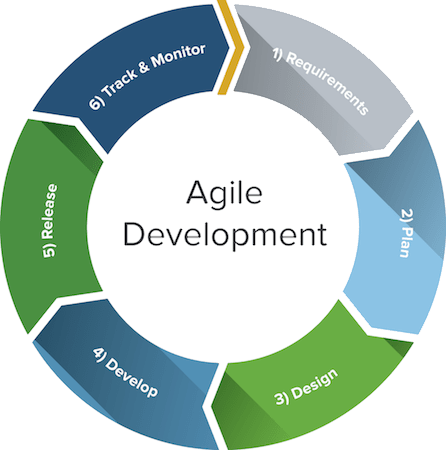
Agile:
A project is divided into sprints or smaller “chunks,” and collaborative teams are divided to work on sprints separately. At the end of a sprint, they come together to discuss their progress and to work out issues collaboratively. Testing is also carried out at the end of each sprint, rather than at the end of the project, to ensure bugs (i.e. mistakes) are fixed right away.
Waterfall:
Waterfall methodology follows a sequential, linear process and is the
most popular version of the systems development life cycle (SDLC) for
software engineering and IT projects. It is sometimes planned using a
Gantt chart, a type of bar chart that shows the start and end dates for
each task. Once one of the eight stages are complete, the development
team moves onto the next step. The team can’t go back to a previous
stage without starting the whole process from the beginning. And, before
the team can move to the next stage, requirements may need to be
reviewed and approved by the customer.
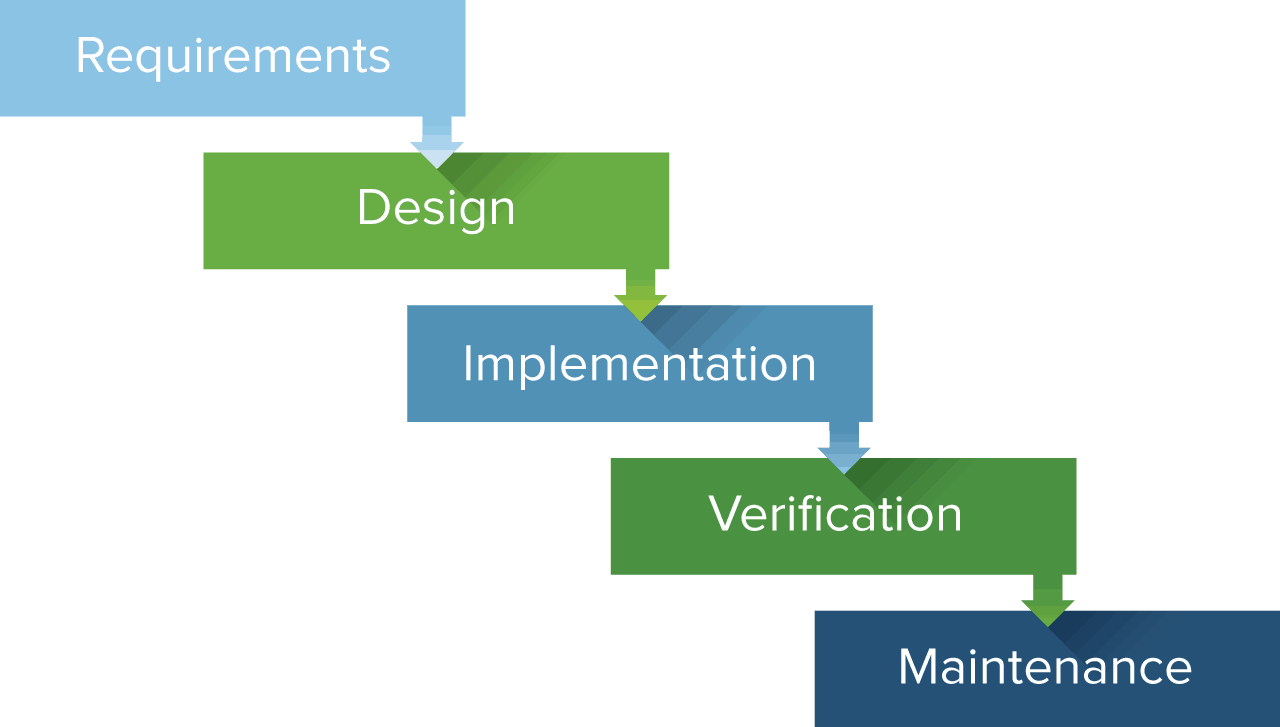
The phases of waterfall:
When to apply which method?
Waterfall can be applied if:
- The outcome or end product is clearly understood.
- Minimal or no changes are expected in the way.
- Customer requirements and deadlines are clearly defined.
- Project resources have the requisite knowledge e.g. they have done many similar project earlier.
Reference:
(1). https://www.smartsheet.com/agile-vs-scrum-vs-waterfall-vs-kanban
(2). https://userbrain.net/blog/agile-waterfall-hybrid
(3). https://blog.udemy.com/agile-vs-waterfall/


No comments:
Post a Comment