Wednesday, October 30, 2019

Planning Types: How to plan a plan.

A plan is a detailed proposal for doing or achieving something. This is achieved by means of a project. Planing a project is all about managing the resource and priorities in an organized way. Every plan has three steps:
  • Devise a plan
  • Define success 
  • Put it in motion
Image result for planning

In general there are 4 types of planing:
  1. Operational Planning
    • This is all about how things should happen. This is the Plan A. It should describe the day to day running of the project.
  2. Strategic Planning
    • This is about why things should happen according to Plan A. This is more high level thinking and keeping future in focus. 
  3. Tactical Planning
    • Tactical planning supports strategic planning as it defines what is going to happen. Tactical planning is different from operational planning in that tactical plans ask specific questions about what needs to happen to accomplish a strategic goal; operational plans ask how the organization will generally do something to accomplish the company’s mission.
  4. Contingency Planning
    • This is a fallback plan or plan B. The plan for the unexpected. 
References:
(1). https://online.alvernia.edu/articles/types-of-planning/
(2). https://study.com/academy/lesson/types-of-planning-strategic-tactical-operational-contingency-planning.html

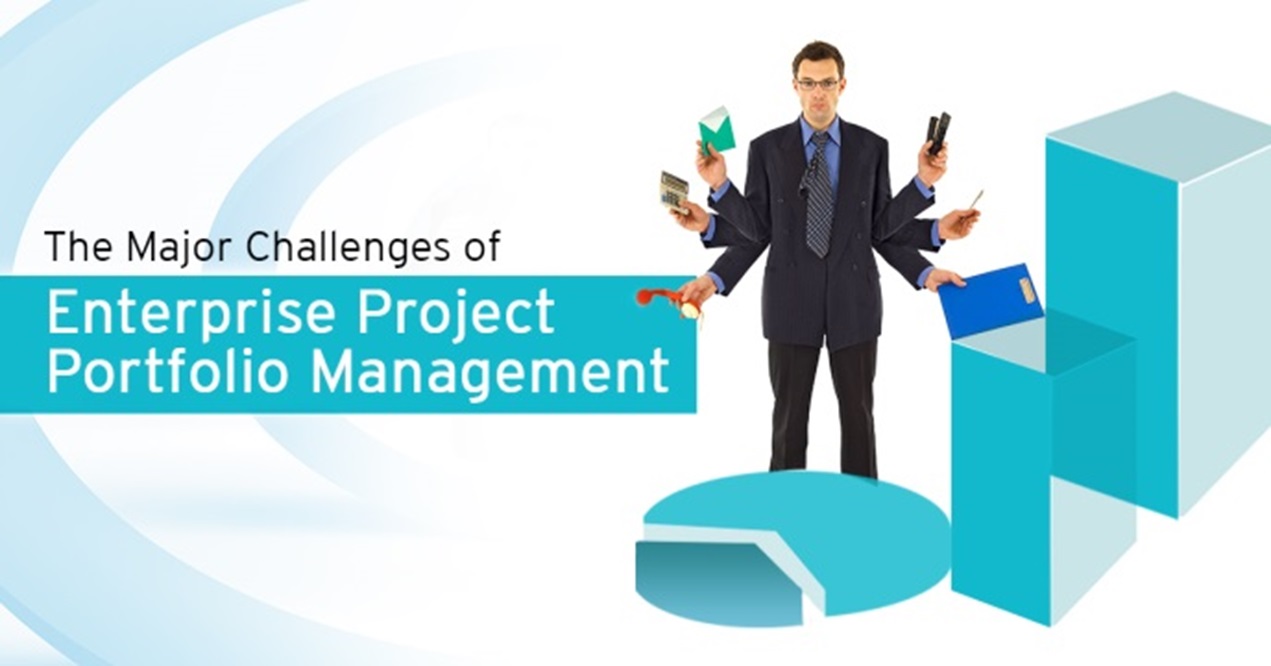
Challenges to Portfolio Management

Image result for portfolio management challenges 

In the previous post, I touched up cultural influence being on challenge to Project Portfolio Management. There are other challenges too. Some of them can be listed as:
  • Internal Politics and Culture
  • Appropriate Sponsorship and Guidance
  • Project Management Maturity
  • Management Commitment
  • Appropriate education
  • Pet Projects
  • Pace of Adoption
  • Financial Investment
  • Human Nature  
Bottom line is that though Project Portfolio Management adaption brings it's benefits, any change in the existing practices brings on resistance from all sides.   

References:
(1). https://www.keyedin.com/article/identifying-the-internal-challenges-and-barriers-to-project-portfolio-management-adoption/
(2). https://www.coras.com/resources/4-portfolio-management-challenges-and-how-to-solve-them
(3). https://blog.synergysbs.com/the-major-challenges-of-enterprise-project-portfolio-management/

Cultural influence in Portfolio Management

Every organization has a specific culture. Organization culture is driven from local culture. Organizational cultural rules, norms and values have a definite affect on Portfolio Management. If there is a "safeguarding culture" or "consensus oriented" culture, it will directly affect the projects within the portfolio. Different opinions and a bit of conflict is part of life. If the company follows a conflict avoiding or safeguarding culture, there is a risk that different divisions will launch too many projects as no division will want to offend the other by asking for the merits or demerits of their projects. Critical decisions may be delayed if the organization follows a consensus driven approach.

Cultural influence in Portfolio Management is even more apparent on a global scale. Some cultures are quite expressive and others are introvert. Communication is vital part of any organizations success.

Similarly, some cultures are quite open to question the overall rationale of the project. Others might find it hard to say ´No'. This makes portfolio management a challenge.

https://madhavisblog.files.wordpress.com/2014/10/life-in-a-matrix-7-cross-cultural.jpg

References:
(1). https://pdfs.semanticscholar.org/18b9/4eafaf3679a247afc3b13444c70aab67f544.pdf
(2). https://hal.archives-ouvertes.fr/hal-00614685/document
(3). https://madhavisblog.wordpress.com/2014/10/29/communication-challenges-due-to-cultural-differences/

Together we win or LOSE !!!

Yesterday a colleague shared an interesting article with me.  It is about Nokia, a past giant in telecom industry. It shows how a bad choice of partner or below par performance from your alliance can lead to loss.
5G networks are complex. It´s not possible for any company to produce them on their own. They have to get supplies and parts from other partners. In this article we see Nokia doing well in the beginning. They make the right calls and acquire rival business from Alcatel-Lucent. They had to take a strategic call for their 5G products and had to choose between two options.
  • A flexible FPGA solution
  • A program specific ASIC solution
Nokia went ahead with the first solution in the hope of reduced time to market as ASICs have their own design and fabrication lead time. Nokia decided to go ahead with the first solution.

Eventually, it turned out that the supplier for FPGA failed to meet the performance requirements promised. Furthermore it couldn´t keep the unit costs down leading to financial worries for Nokia. When the news was out, we can see in the picture below how the share price flopped.   

Nokia's Share Price in Helsinki Since October 21
(Source: Yahoo Finance)

The questions are:
  • Did Nokia do the requite homework before their choice of FPGA solution and eventual vendor decision?
  • Was the risk and benefit management process followed before taking such strategic decision?
  • What is the plan to get back in the game?
Reference:
(1). https://www.lightreading.com/mobile/5g/nokias-5g-chip-choice-leaves-it-exposed/d/d-id/755184

Strategic Project Manager

In recent years, Strategic Project Manager (SPM) is becoming an increasingly vital role. With the responsibility and authority associated with it, it is becoming a well paid and much sought after role too.

Strategic Project Manager 
Lets try to understand a strategic project managers role.
Unlike an ordinary Project Manager (PM), an SPM has to keep an eye on the future. While the PM is focused on his project variables, an SPM is focused on a departmental or organizational level. With consultation with portfolio manager, an SPM helps define strategy and roadmap. Alignment of strategies and projects is an vital part of the job. While the PM is involved in the day-to-day running of project, SPM is only interested in the outcome.  Usually senior PMs with experience of multiple projects become SPM.  
 
Reference:
(1). https://sharedynamics.com/training/strategic-project-manager

Tuesday, October 29, 2019

Housekeeping Projects

According to PMI, a project is a temporary endeavor to create a unique, result or service. This definition does not say that the result or service has to be external customer oriented. A project can be initiated in house to present a better service to the company itself.
Examples:
- A fact finding project to identify waste within the company
- A project to reproduce a product or service that the company takes from 3rd parties. This will result in cost saving and improved lead times.
- A project or initiative to improve internal communication or remove hurdles.
- An in house skill development and training project to improve organizational capabilities.
- A project to change the way of working within the company, e.g. going lean and agile.
- Archiving or documenting best practices and lessons learned from previous projects. 

Image result for improvement projects
Although all these projects have in house customers, the big picture is to improve the external customers experience.

Reference
(1).   Project Management Institute. 2017. A Guide to the Project Management Book of Knowledge (PMBOK Guide) – Sixth Edition.  

Opportunity Loss

Opportunity loss is a cost or profit loss for taking a certain course of action that prevented the investors to gain full potential profit. In other words, it's the cost of being locked in to a certain solution and not exploiting the alternative solutions.

Measuring the opportunity loss is as important as measuring the benefits of a product. Suppose a company has to produce a product. It has two options which are quite different and unique. The company would do the following:
  • List down benefits for going with solution A
  • List down opportunity loss for going with solution A
  • List down benefits for going with solution B
  • List down opportunity loss for going with solution B  
If the end the company should go with the solution that has high benefits and small costs for choosing to make that solution.

Image result for opportunity for loss or benefit


Reference:
(1). http://ifci.ch/00012254.htm
(2). https://wiki.treasurers.org/wiki/Opportunity_loss
(3). https://www.learningall.com/what-is-opportunity-cost-with-example/  

Reporting the right way

Suppose you are a product manager. Your product have many projects running under it. E.g. the product is a luxury car and projects are the engine, seats, tires and electronics. Each team reports to you. There can be 80 different teams working for your project. Thus you will get 80 weekly reports via email for your product. Some teams may be ahead of schedule, some behind and some stalled. Would all this make sense? No.

Individually these reports mean nothing, together they mean everything.

Imagine now that the whole product is divided into small items and these items are distributed to different teams. You have a platform where all these items and their sub-items are visible and each team report to this platform for status reporting. This way you will have a good understanding of where you stand in the product. Plus not only you will be able to see the progress, all teams will be able to track down progress. This will help transparency.

Software teams often track features and requirements covered in the project to track progress. It doesn't matter if the feature is covered by one team or many. Reporting this way gives a logical and holistic view of progress. 

Monday, October 28, 2019

Strategic Alignment and misalignment

Strategic Alignment is the process of business model redesign to align strategic goals, business model, culture and values. In a fast and disruptive world how quickly an organization strategically aligns itself, can be the difference between make and break.

Example of successful strategic alignments:
  • Netflix, changed from a video tape rental to leading streaming platform
  • Southwest Airlines
  • Toyota Motors
  • Andriod, IOS
  • Samsung
Example of strategic misalignments:
  • Blockbuster, from largest video tape rental to bust.
  • Northwest Airlines 
  • General Motors
  • Symbian OS
  • Kodak Photos
  • Atari 
Thus the rule of thumb is, align or be lost in time.

Reference:
(1). http://www.advancebusinessconsulting.com/advance!/strategic-alignment/strategic-alignment-business-cases.aspx

Line Managers drive Capability Management

Difference between capacity management and capability management is well understood. Project managers are responsible for capacity planning and management. They are to set requirements on the number of resources required. Suppose if they estimate a design and verification task of  120 hours that is to be completed in 1 week, they will request for 3 resources considering average working duration of 40 hours a week.

The line manager has to take this resource number and fix names against requirements. If the resources are busy with multiple projects, the capability to complete 120 hours job for the above project will be hard to meet. Context switching from one project to another is not easy.
On the other hand, if the resources are experience and have done similar projects earlier too, they might be able to complete the task ahead of the planned time.

Line manager should have knowledge of the skill level, past experiences, availability and commitment level of the employees under his responsibility. It is with these factors that Line Managers drive Capability Management.

Capacity vs Resource Planning

These two terms are often used interchangeably but they are not the same. Capacity planning is forecasting how many resources will be needed during the course of the project. It is a demand of number of people and the skill set needed within them. Capacity planning is even more relevant when running many project together and having even more in the pipeline.

Capacity planning 

Capacity planning does not specify who in the organization will do what in the project, it is merely a sketch of resource and skills demand.

Resource planning on the other hand is the process of actual resource allocation and putting faces to positions. A person might be allocated to two projects at the same time due to a certain skill set he possess. This kind of situation is handled via resource planning and not via capacity planning. 

Capacity planning is usually an activity performed by Project Manager while resource planning is performed by a Line manager in consultation with project manager. 

Capacity planning vs. resource planning comparison
resource planning vs. capacity planning

Reference:
(1). https://www.kelloo.com/single-post-2017-09-06-difference-between-resource-planning-and-capacity-planning/

Sunday, October 27, 2019

Customer always right? No ...

Customer always right have been the corner stone of customer engagement. If you like pizza, you will go to any of the pizza restaurants around your place. Whether you like thin crust or thick, onions or mushrooms, less cheese or more, you as a customer can choose among all the restaurants that serve your taste. Imagine if by some reason all but one pizza restaurant remains in your neighborhood. Now it a different situation as you as a customer and pizza chef as service provider will know that you have lost the luxury of choice. So now if you want to have your customized pizza, you may look to cut a deal with the chef like I will eat here twice a week for 2 months if you serve a pizza with so and so amendments in the original recipe.

Image result for customer always right 

5G deployment in USA is a similar story. One of the biggest player in the industry; Huawei, is banned owing to security concerns. Ericsson appears to be the only choice since Nokia, ZTE, Samsung etc. cannot match the demand and requirements put forward by North American operators. This means that Ericsson can dictates the terms of engagement. Instead, the network operators are signing long term engagement agreements with Ericsson to ensure a constant supply line for 5G network deployment as they face a race with rest of the world.

Saturday, October 26, 2019

Competitors’ intelligence

Competitive intelligence us the process of defining, collecting, analyzing intelligence about competitions plans and products. Unlike industrial espionage, this is a legal practice. Information gathered via this can be fed back into the decision making loop to fine tune one's own course. Thus this helps in strategic alignment.

competitive-intelligence

On a wider scope, it can gather information not just from the immediate competitor but also the business environment and the geopolitical situation.
So how to define a complete competitive system. Here is a step by step guide.
 Identify the competitors
  1. Define KPIs and areas of interest  to collect data about.
  2. Gather the intelligence.
  3. Analyze the information
  4. Communicate the findings upwards in your company
  5. Turn this info into action points.
  6. Act upon the action points an d reap the benefits.
Reference:
(1),  https://en.wikipedia.org/wiki/Competitive_intelligence
(2). https://www.corporate360.us/blog/power-competitive-intelligence-marketing/

Friday, October 25, 2019

High Performing Jerks: How to deal with them

We all know them and we come across them during our daily work lives. They are good is what they deliver to the organization but they are bad with their peers and subordinates. Since their performance is high, management see no problem with them and that further frustrates their team members.

High Performing Jerks = Culture Crushers!

This can take on a sinister look too. An example is from Uber when an employee opened up about a manager who was harassing employees. The company's HR responded that they couldn't fire the manager because he was a 'high performer'. In the end it was a PR disaster for Uber and they might have suffered more that what the high performer added.

So how do we deal with them:
For this to happen the management needs to take certain steps.

  • Encourage team work over individual brilliance. Shinning within the team is fine and should be recognized but overall try to take the teams forward rather than individuals.
  • Establish a culture that stands on strong values.
  • Perform 360 evaluations and feedbacks. Don't just ask the immediate boss about someone, conduct interviews among peers and subordinates.
  • Don't isolate the jerks as it will only ruin it further, talk to them.
  • If talking doesn't help, be persistent and talk again.
  • Lead by example.
Reference:
(1). https://www.theguardian.com/technology/2017/jun/18/uber-travis-kalanick-scandal-pr-disaster-timeline
(2). https://carasconsulting.com/how-to-deal-with-a-high-performing-jerk/

System Thinking Tools

An advantage of studying portfolio management from a university as compared to some private sector company is that one gets a holistic view. Thus not just the popular approaches like PMI viewpoint is explained, others like systems thinking is touched too.

What is systems thinking?
This can be defined as an approach to consider and view system as a whole rather than focus on components. Systems thinking focus on the relationship and interactions of components rather than the studying them individually.

This blog is about the tools used in system thinking.
 Some of them are:

  • Fishbone diagram 


  • Context Diagram  
  •  Actor Maps
 
  •  Concept Maps:
  •  Trend Maps
Senior Portfolio Manager jobs, salary benchmarking, skill ...

  • Casual loop diagrams
 
Reference:
(1). https://www.conceptdraw.com/samples/resource/images/solutions/Business-productivity-Fishbone-diagram-Causes-of-low-quality-output.png
(2).  https://uit.stanford.edu/sites/default/files/images/2017/08/30/Context%20Diagram.png
(3). https://www.researchgate.net/figure/Existing-complex-actor-map_fig1_309428698
(4). https://cmap.ihmc.us/docs/images/Theory/Fig1CmapAboutCmaps-large.png
(5).https://www.itjobswatch.co.uk/charts/permanent-demand-trend.aspx?s=senior+portfolio+manager&l=uk
(6).https://blogger.googleusercontent.com/img/b/R29vZ2xl/AVvXsEghXpIFQ1j93AAvcYVoFMfYohl9ejzBZb77Fu_-E9pMPJ78rCOq66fUhf3saM5x2M9g34h9cxYTabo3RkUYMJ4FFYyd2RuSjAoBrPdvDgYZsmKneh4HjVgU5YLYKg0itGbl2I1z70CxdWY/s1600/Sustainable+Development.gif
(7).  https://www.apm.org.uk/media/25516/systems-thinking-for-portfolio-programme-and-project-managers-v10.pdf
 

Portfolio management turns investments into capabilities

Organizational capability is directly linked with value and benefits. So, the purpose is to turn investments into value. Once an investm...